
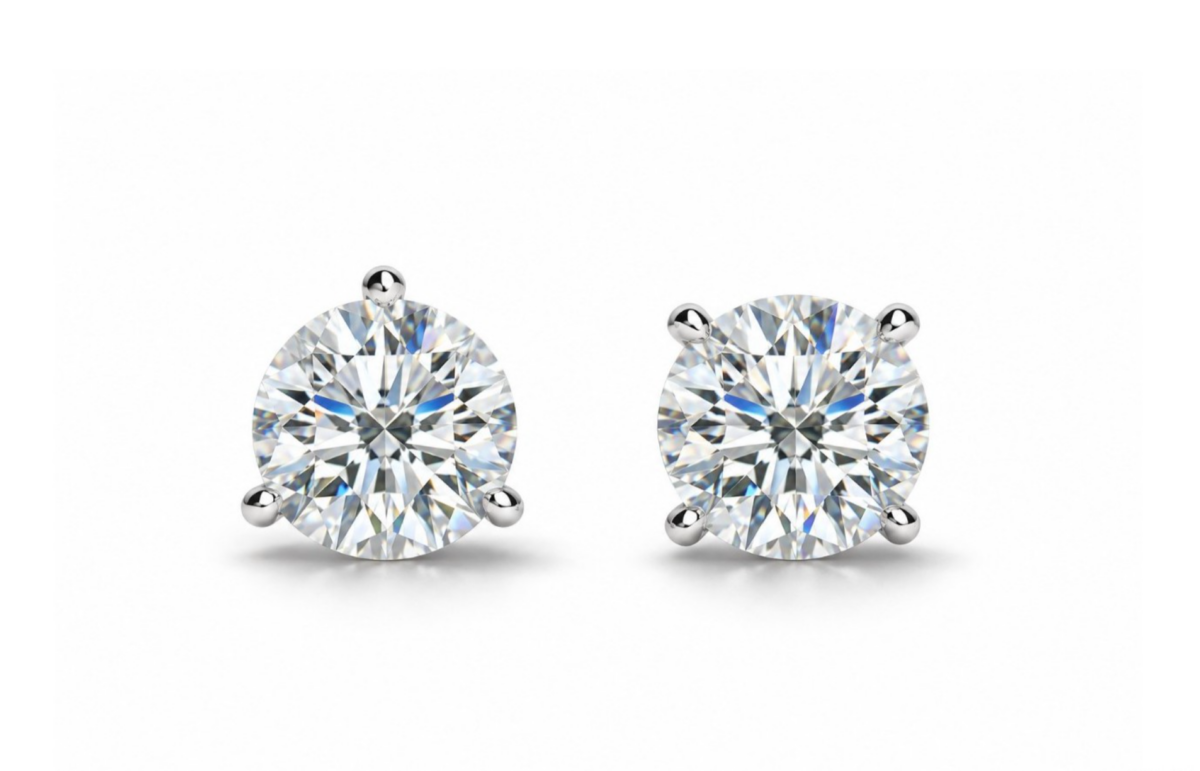
The difference between three-prong and four-prong diamond studs is small in a photo. On your ear, it can change the whole feel of the pair.
Three-prong martini studs have an open look that lets the round diamond’s outline stand out. Four-prong basket studs frame the stone at four points for a more traditional finish. Neither is automatically the better choice. How the earrings sit, how the backs feel and which look you prefer matter more than counting prongs alone.
At ID Jewelry, we offer both styles in lab-grown diamonds. Here is how to choose between them.
3-Prong vs. 4-Prong Diamond Studs at a Glance
Three-prong martini
- Front view: Three contact points around the round diamond.
- Side profile: A tapered, cup-like mounting.
- Best reason to choose it: You prefer a minimal setting.
- What to check: How the tapered base rests against your ear.
Four-prong basket
- Front view: Four contact points create a more structured frame.
- Side profile: A basket-style mounting beneath the stone.
- Best reason to choose it: You love the classic diamond-stud look.
- What to check: How the basket and backing support the earring.
Both styles can work for everyday wear. The specific mounting, diamond size and backing determine how a pair feels.
Why Choose Three-Prong Martini Studs?
A martini setting takes its name from its shape. From the side, the mounting tapers like a martini glass.
Three prongs hold the diamond around its edge. With one fewer contact point than a four-prong setting, the design keeps the focus on the stone’s round outline.
This is a lovely choice if you want the setting to stay in the background. Think a white shirt, hair tucked behind your ears and a pair of diamonds that needs nothing else.
The tapered profile often sits close to the lobe. But low-profile does not mean universally comfortable. The base should rest comfortably against your ear, without pressure from an overtight backing.
See our 2.00ct total-weight lab-grown studs in a three-prong martini setting. This pair features round diamonds, 14K white gold and push backs.
Why Choose Four-Prong Basket Studs?
Four-prong studs have a familiar shape: a round diamond held at four points, with a basket underneath.
Those four contact points give the stone a more defined frame. Depending on the prong shape, that frame can make a round diamond look slightly squarer at a glance. It is a subtle difference, not a change to the diamond itself.
Choose this style if you like a traditional stud with a little more visible structure. It works just as well with a winter sweater as with an evening dress.
Our 2.00ct total-weight lab-grown studs in a four-prong basket setting also feature round diamonds, 14K white gold and push backs.
Are Four Prongs More Secure Than Three?
Four prongs provide an additional point of contact. That does not make every four-prong setting safer than every three-prong setting.
Well-made prongs must fit the diamond properly. Worn, bent or loose prongs need attention in either design. The back matters too: it holds the entire earring on your ear, regardless of how many prongs surround the stone.
Ask how the backing fastens and how it should feel when secure. Do not assume a martini setting comes with screw backs, or that a basket setting does. The two ID Jewelry pairs linked above have push backs.
If an earring catches on clothing, feels loose or has a visibly damaged prong, stop wearing it until a jeweler checks it.
Which Setting Looks Bigger or Sparkles More?
Neither setting adds carat weight or guarantees more sparkle.
A three-prong design can draw less attention to the mounting. A four-prong design can give the diamond a stronger outline. The effect depends on the thickness and shape of the actual prongs.
For sparkle, start with the diamonds themselves. Cut quality, matching and cleanliness matter more than one extra prong.
Also check what the weight means. A pair listed as 2.00ct total weight contains approximately 1.00ct per earring when the stones match in weight. It does not mean two 2.00ct diamonds.
Our guide to lab-grown earrings, bracelets and pendants explains how size, cut and setting work together.
How to Choose a Pair You Will Actually Wear
Start with the earrings you already reach for. If you like delicate pieces with little visible metal, begin with three-prong martini studs. If your taste leans classic, start with four-prong baskets.
Then check the fit:
- Look straight ahead to see whether the studs sit upright.
- Turn sideways to compare the profile against your lobe.
- Check for pressure from the base or backing.
- Make sure you can comfortably fasten and remove the backs.
Larger studs may need more support from the backing. Prong count alone will not prevent an earring from tipping forward.
Buying a holiday gift? Her current jewelry is a better clue than a trend list. Our tips for wearing diamond earrings can help you picture how studs fit into her everyday wardrobe.
Find Your Lab-Grown Diamond Studs at ID Jewelry
ID Jewelry is a family-owned jeweler established in 1986. Our showroom is at 15 West 47th Street, Suite 305, in New York City’s Diamond District.
Browse our lab-grown diamond studs to compare three-prong and four-prong options. If you are deciding between sizes or settings, call us at 888-921-9372 or visit our showroom for help choosing your pair.
Shopping online? We offer free shipping within the USA.
The right setting should make you notice the diamonds, not think about the earrings. Choose the look you love, check the fit and let us help with the details.