
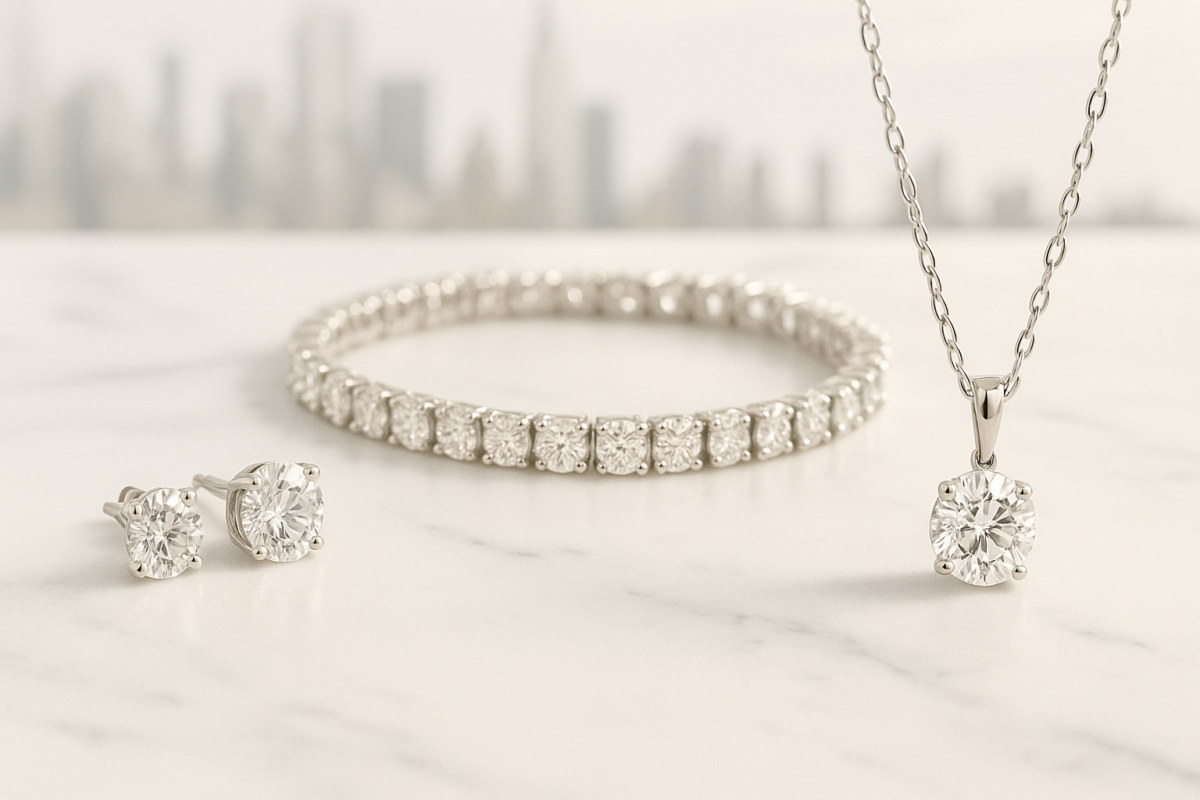
Lab-grown diamonds aren’t a trend piece anymore. People buy them for everyday jewelry because they look the part and don’t blow up the budget. Check out this Lab Grown Diamond guide if you’re comparing studs, tennis bracelets, or a simple pendant and want the quick version without the fluff, start here.
What “Lab-Grown” Really Means
A lab-grown diamond is still a diamond. It’s grown from a tiny seed, layer by layer, until you get the same crystal structure as natural. Jewelers grade them with the same 4Cs—cut, color, clarity, carat. The big differences you’ll feel are price and availability. In other words, more stone for the money and more sizes in stock.
Stud Earrings: Small Choices That Change Everything
Size & Budget (what “ct tw” looks like on an ear)
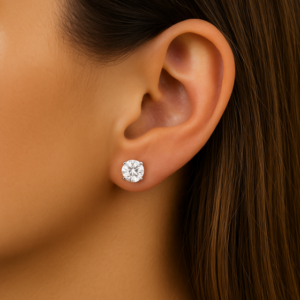
“Carat total weight” is both stones together. On most ears, 1.00 ct tw reads clean and everyday. 1.50–2.00 ct tw pops a bit more—great if you wear your hair up or want that extra sparkle in photos. Quick test: hold the size card to your ear and step back from the mirror. What you notice from five feet is what other people will notice.
Cut First, Then Color/Clarity
Cut makes the brightness. A well-cut 1.00 ct tw pair will beat a dull 1.50 ct tw pair every day of the week. For color and clarity, most people land around G–H and VS–SI1. That zone looks bright on the ear without paying for specs you’ll never see.
Settings & Backs (comfort and security)
Three-prong “martini” sits low and neat. Four-prong feels classic. Bezels are smooth, modern, and snag less on sweaters. Screw backs are very secure; friction backs go on and off faster. If you sleep in your studs (many do), ask to try the backs you’ll actually wear.
ID Jewelry note: Our steady favorite is a 2.00 ct tw lab-grown pair in 14kt white gold—bright, clean, easy to live in.
Tennis Bracelets: Make It Sit Right, Then Worry About Carat
Carat Weight & Wrist Size
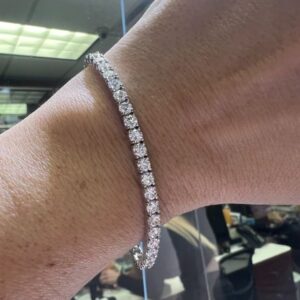
Think about how you use your hands. If you type all day or push a stroller, 3–4 ct looks refined and stays practical. Five to seven carats is dressier and photographs beautifully. Try the bracelet, rest your arm on the counter, and rotate your wrist. If it moves with you, you’re in the right range.
Length, Fit & Flip
Most wrists fit 6.5″, 7″, or 7.5″. You want a little ease—about a finger’s width—so it doesn’t pinch. Too loose and it flips. If your bracelet keeps spinning, you may need a link out or a lower-profile setting.
Setting, Metal & Clasp
Four-prong gives maximum sparkle. Bezels or low-profile styles glide under sleeves. White gold and platinum read bright; yellow and rose bring warmth next to the skin. Don’t skip the clasp check: box clasp with a safety. Click. Snug. No guessing.
ID Jewelry note: We stock lab-grown tennis bracelets across everyday and special-occasion ranges, all with sturdy clasps. Bring your watch—match heights so they stack clean.
Pendants: Proportion Is Everything
Center Stone Size & Chain Length
For daily wear, 0.50–1.00 carat is a sweet spot. Bigger reads “statement” fast, especially in bright white gold. Chain length changes the whole look: 16″ sits high at the collarbone, 18″ is the default, 20″ layers well with a second chain. If you already have a favorite chain, bring it. We’ll try the pendant on that one first.
Bail, Bezel & Comfort
A smooth bezel or well-finished prongs keep knits safe. Make sure the bail is wide enough for thicker chains if you plan to swap. Adjustable chains (16–18″) are handy—you get two looks out of one piece.
ID Jewelry note: Our go-to solitaire pendant in 14kt white gold is a simple, bright piece that layers with almost anything.
Value Talk (No Hype)
With lab-grown, you usually step up a size without stepping up the bill the same way. That’s the appeal. Still check the basics: how it’s cut, what color range you’re getting, clarity you can live with, and the store’s service policy. Some shoppers prefer natural for heirloom reasons or personal taste. No wrong answers—just know your goal before you buy.
Care & Maintenance: Keep It Simple
Warm water, a drop of mild dish soap, soft brush. Rinse. Pat dry with a lint-free cloth. Store studs and bracelets separately so they don’t scuff each other. Look over backs and clasps every few months. Swing by for a quick in-store cleaning—we’ll tighten anything that needs it.
Quick Buying Checklist
* Everyday or special occasion?
* Size that reads right on *you* (ear, wrist, neck)
* Cut first; then color and clarity
* Setting comfort and security (backs, clasp, bezel/prong)
* Chain length and adjustability for pendants
* Warranty, sizing, cleaning, and trade-up options
Where We Can Help
We’re in the NYC Diamond District every day but Saturday. If you want to see sizes side by side, we’ll line them up on a tray and let you pick with your eyes, not a spec sheet. We can take a link out while you wait, swap chains, match metals to pieces you already own, and make sure the clasp and backs feel right before you leave. Lab-grown or natural, the goal is the same: a piece you’ll actually wear.