

If you are shopping for a diamond for an engagement ring or any type of jewelry, should you go with a natural diamond or consider one that has been produced in a lab? To understand the pros and cons of lab diamonds vs natural diamonds, it helps to know a bit about how natural diamonds come to be and the processes by which humans create diamonds in the lab.
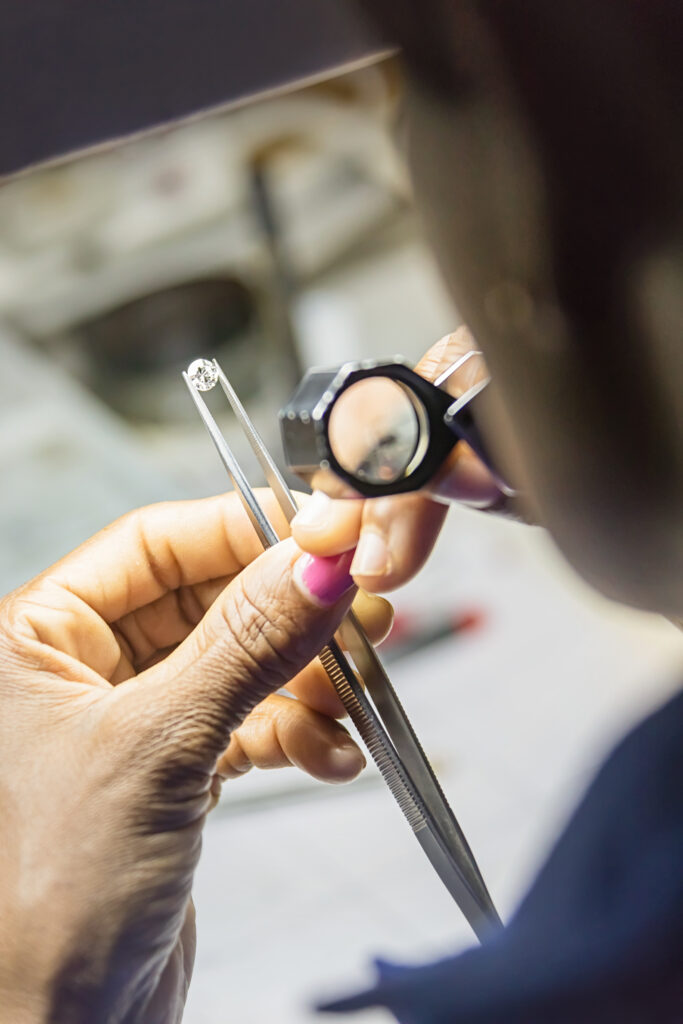
How Today’s Natural Diamonds Were Formed
Most of the natural diamonds you will see in a jewelry store are between one billion and three and a half billion years old! They were formed under extreme pressure and at high temperatures from a hundred miles to as far down as five hundred miles beneath the surface of the earth from the element carbon. The diamonds arrived at the surface of the earth due to volcanic activity tens to hundreds of million years ago and can be found today in volcanic rock deposits called kimberlites and lamproites.
Natural diamonds are solid carbon in crystal form, a diamond cubic. This crystalline form of carbon is the hardest naturally occurring substance. The rigid arrangement of atoms in a diamond keeps impurities (except boron and nitrogen) out. When there are impurities in the range of one atom per million carbon atoms, you get a colored diamond. Blue comes from boron. Yellow comes from nitrogen.
The beauty of a natural diamond comes from its ability to disperse light of different colors creating the sparkle and brilliance that we expect from a diamond.
Lab Diamonds
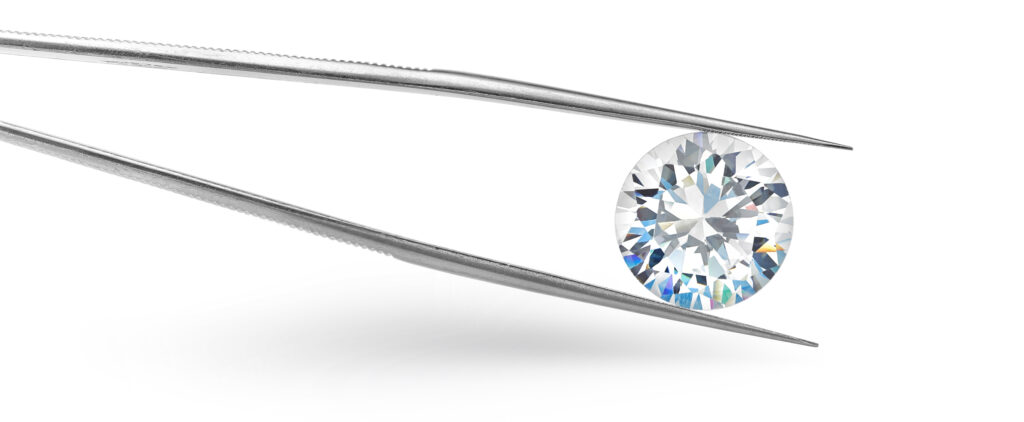
Lab diamonds, also called synthetic diamonds are made from the same substance as natural diamonds, pure carbon which has crystallized in what is called an isotropic three dimensional form. The primary difference between lab diamonds vs natural diamonds is that natural diamonds are created by natural processes deep within the earth while lab diamonds are created in a laboratory.
Scientists were only able to reliably produce diamonds in the lab by 1954. Today there are several processes for making lab diamonds for industry and jewelry. In the lab it is possible to produce clear white diamonds as well as blue, brown, green, orange, and yellow. The only way that you can make sure if a diamond is natural or a lab diamond is by using an optical test called spectroscopy or by measuring thermal conductivity.
In other words, lab diamonds and natural diamonds look the same, have the same hardness, and have the same sparkle and brilliance.L
Why Choose a Lab Diamond?
Some choose a lab diamond because they are concerned about conflict diamonds and simply do not want to take a chance. When you buy a diamond from us at IDJewelry, you can be assured that we know where every diamond that we sell came from and never carry in stock or sell conflict diamonds!
Lab diamonds, like natural diamonds, are priced according to their carat weight, clarity, color, and cut. Pick the diamond that you like and whether it is natural or lab-grown and it will be a joy forever.