
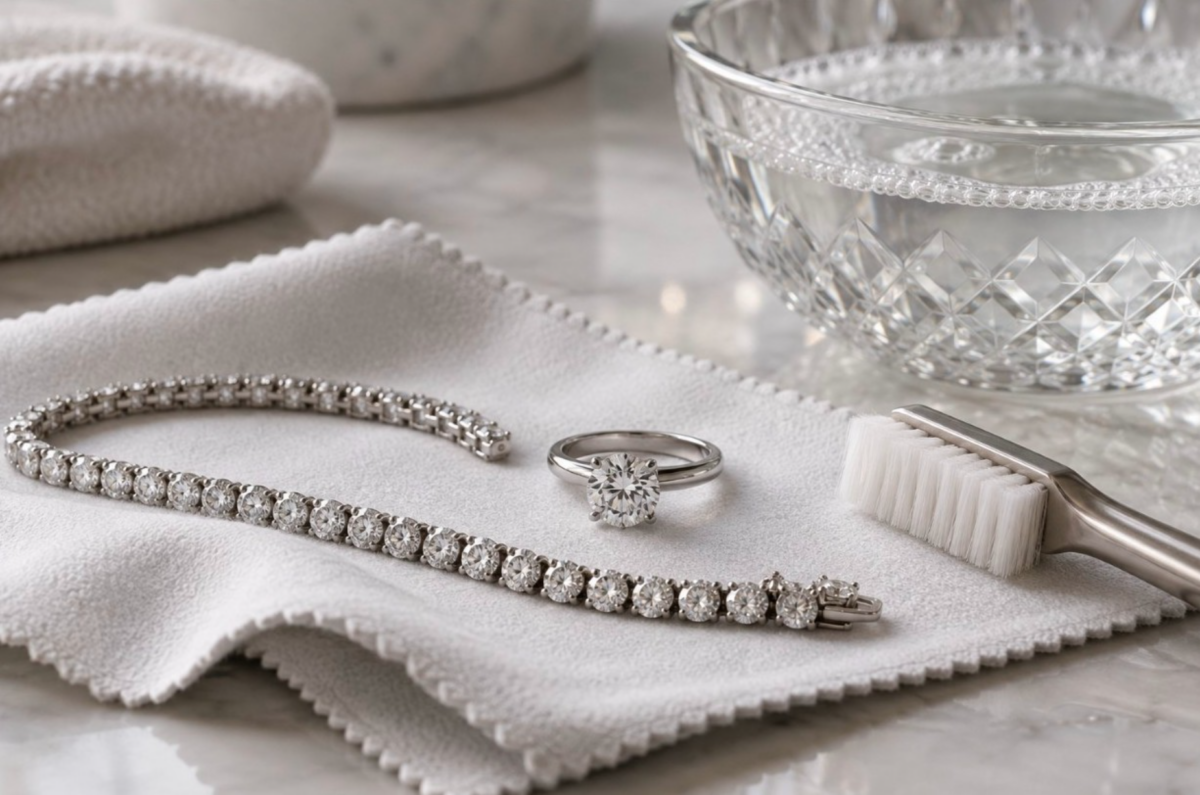
We get asked how to clean lab-grown diamonds almost as often as we get asked about buying them. Warm water, a drop of dish soap, and a soft toothbrush handle 90 percent of it. The other 10 percent is storage and insurance. That’s where people actually lose value, not from a cleaning mistake.
How to Clean Lab-Grown Diamonds at Home
Start with warm water in a small bowl, not hot. Add a few drops of plain dish soap, nothing fancy. Let the piece soak for twenty minutes. That gives the soap time to loosen whatever’s built up in the setting, lotion, soap scum, everyday grime.
Next, grab a baby toothbrush or something with very soft bristles. Work around the back of the stone and the prongs. That’s where oil collects fastest, and it kills the sparkle before anywhere else does. Rinse under running water with the drain plugged. Rings have a way of disappearing down open drains the second you forget that step. Pat the piece dry with a lint-free cloth. Let it air dry the rest of the way before you put it back on.
Build-up like this happens more often than people expect, especially on pieces worn every day without a regular cleaning routine. A quick soak and brush is usually enough to bring the sparkle right back.
How Often Should You Clean Lab-Grown Diamond Jewelry?
Once every two weeks for anything you wear daily. Once a month is fine for occasional pieces. Swim, work out, or wear lotion right before putting jewelry on? Clean it more often. Those three things build up residue faster than almost anything else we see at the counter.
What Not to Do
Skip the ultrasonic cleaner unless you know the setting can handle vibration. Pave and halo settings, especially older ones, can loosen under repeated ultrasonic use. Skip toothpaste too. It’s abrasive enough to scratch softer metals like rose gold over time, even though the diamond itself won’t feel it. And never use bleach or chlorine on a piece with gold. Chlorine weakens gold alloys and causes pitting you can’t undo.
We wrote a deeper breakdown of this years back, including what to do about tarnish on white gold. Our ring cleaning guide from the pandemic years still holds up almost word for word today.
Storage Matters More Than People Think
Diamonds are the hardest natural material there is. That hardness cuts both ways. A loose diamond in a drawer next to another piece will scratch softer metal without much effort at all. It can even chip a neighboring diamond’s girdle if the two knock together over time.
Keep pieces separated. A basic jewelry box with individual compartments does the job fine. Traveling? A soft pouch per piece works too, just don’t toss everything into one zip pocket together. We’ve had bracelets come in with bent clasps from being crushed against a ring in the same bag.
Insurance Is the Part People Skip, and Shouldn’t
Here’s the uncomfortable truth. Most homeowners or renters policies cap jewelry coverage somewhere between $1,000 and $2,500 total. That cap applies no matter what any single piece is actually worth. A lab-grown tennis bracelet, or a serious engagement ring, can blow past that number by itself, easily.
A standalone jewelry policy, sometimes called a rider or a floater, covers a piece at its appraised value instead. It typically covers loss, theft, and accidental damage, three things a homeowners policy often won’t touch. Premiums usually run 1 to 2 percent of appraised value per year. On a $6,000 bracelet, that’s roughly $60 to $120 a year. Not much, given what’s actually at risk.
We put together a full walkthrough of the process, what an appraisal needs to include, and what to ask a carrier before you sign. Read how to purchase insurance on your jewelry before calling anyone. Know what to ask for going in, instead of taking whatever the first quote offers you.
A Quick Checklist
- Clean every two weeks with warm water, mild soap, and a soft brush
- Skip ultrasonic cleaners on delicate or pave settings
- Store pieces separately, never loose in one pouch or drawer
- Get an appraisal within the first year of buying anything over $1,000
- Add a rider or floater policy instead of relying on a homeowners cap
None of this takes more than a few minutes a month. The stone itself doesn’t need much. Storage habits and paperwork are what actually protect it long term, and those are exactly the two things people put off until something goes wrong.