
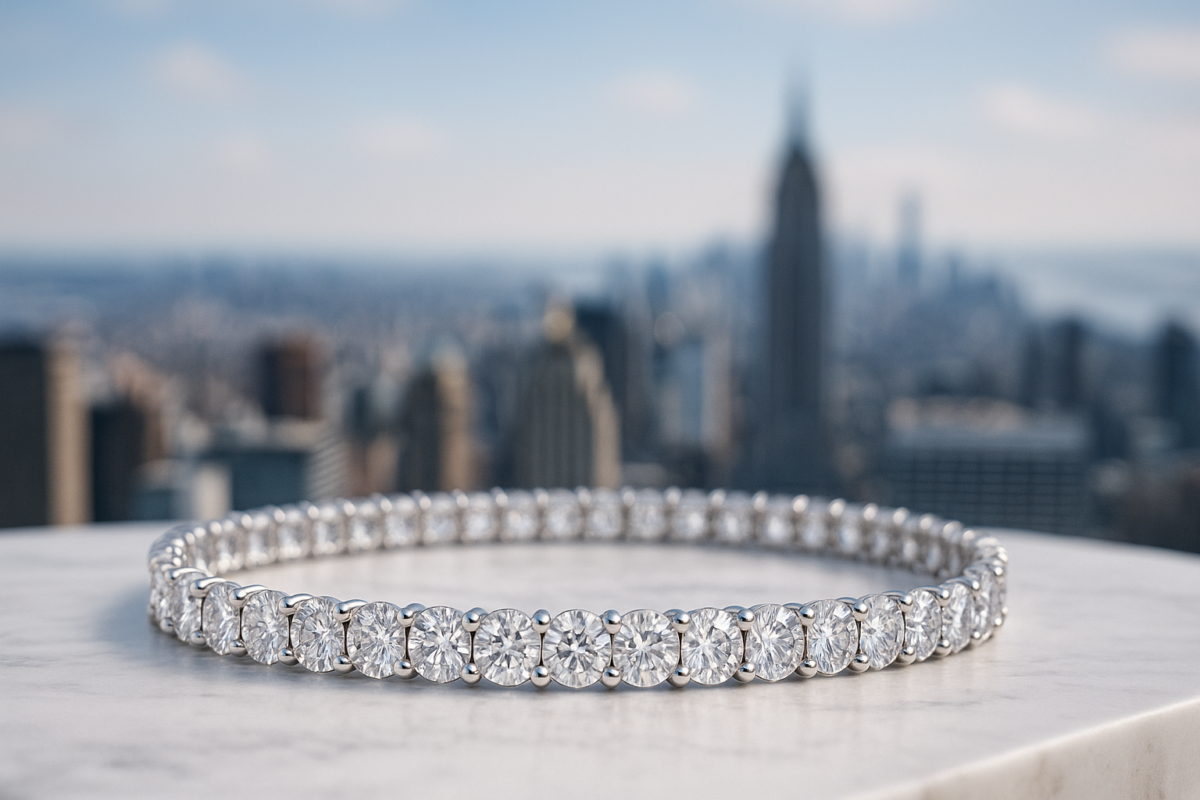
Lab grown tennis bracelets are everywhere right now. Not just at events—on commutes, at the office, out to dinner. The look is classic, the sparkle is real, and the pricing lets you go a little bigger without going overboard. If you’ve been thinking about one, this is the quick, plain-English guide to getting a bracelet that actually sits right and stays put.
Start with the fit (before carat)
Most people buy with their eyes and forget the fit. Don’t. A good tennis bracelet should move a little but not spin like a top. Wrap a soft tape around your wrist bone, then add a quarter to half an inch for ease. That number usually lands you in 6.5″, 7″, or 7.5″. Between sizes? We can remove a link or add a short extender.
The flip test
Try the bracelet on and rest your forearm on the counter. Rotate your wrist like you’re typing or lifting a coffee. If the line of stones stays centered and doesn’t flip over, the length and the profile are right. If it spins, it’s either too loose or the setting sits too tall for your wrist.
Carat weight: everyday vs. dressy
Carat weight changes the mood fast.
• 3–4 ct total reads clean and wearable every day. Slides under a sleeve without fuss.
• 5–6 ct has more presence and still works for day-to-night.

• 7 ct+ is bold, bright, and great for photos and events.
The best test is side-by-side. Put two carat ranges on, step back from the mirror, and look from a few feet away. What you notice at that distance is what everyone else sees.
Setting styles: sparkle vs. smooth
You’ve got three common routes:
Four-prong (classic)
Maximum light and fire. It sits a touch higher, which creates that “line of diamonds” look people want.
Bezel or semi-bezel
Each stone has a clean rim of metal. Lower profile, snag-resistant, easy under knit sleeves and jackets. Feels modern without trying.
Low-profile prong
Keeps the open look of prongs but hugs the wrist more than a tall four-prong. A smart choice if you’re busy with your hands.
Metal color: match your other pieces
White gold or platinum reads crisp and bright and pairs well with most watches. Yellow gold brings warmth and looks great on almost every skin tone. Rose gold is soft and modern. If you stack, bring your watch—matching heights and metals keeps the stack from clacking around all day.
The clasp: non-negotiable
This is the part that keeps your bracelet on your wrist, not in a cab seat. Look for a box clasp that shuts with a clean click and a figure-eight safety on at least one side. Close it yourself in the store. It should feel secure but not fussy. If it’s tricky while you’re standing at the counter, it won’t get easier at home.
Why lab-grown makes sense for bracelets
Bracelets see daily wear—desks, jackets, gym bags, seat belts. With lab-grown, you can step up a size without stepping up the bill the same way. That means more sparkle for the same budget, or room to add matching studs. Still check the basics: cut quality first, then color and overall make. A bright, well-cut 4 ct will outshine a dull 6 ct every time.
Quick Fit & Sparkle Test (2 minutes in the store)
Measure & move. Slip it on, rest your arm, rotate your wrist. If it stays centered and calm, you’re close.
Sleeve check. Pull a sweater over it. Snagging means try a lower profile or take a link out.
Stack check. Put it next to your watch. Heights should match so pieces don’t bump all day.
Clasp click. Close the box clasp yourself. You want a clean click and a safety that locks without a fight.
Light test. Step back from the mirror. The brighter cut wins, not the bigger number on the tag.
Fast answers (most asked)
How tight should it be?
About a finger’s width of ease. Too loose and it flips; too tight and it pinches.
Everyday or event size?
Daily: 3–4 ct. Day-to-night: 5–6 ct. Events: 7 ct and up.
Best setting if I live in sweaters?
Bezel or low-profile prong. Fewer snags, smoother under sleeves.
White, yellow, or rose?
Match what you already wear most. White reads brightest; yellow and rose add warmth.
Care and quick checks
Warm water, a drop of mild dish soap, and a soft brush will handle most cleaning. Rinse, then pat dry with a lint-free cloth. Store the bracelet by itself so it doesn’t rub other pieces. Every few months, check the clasp, safety, and a handful of prongs. If anything feels loose, bring it in—tightening now beats fixing later.
How we fit at ID Jewelry
We line up two or three carat ranges and a couple of setting styles so you can compare in seconds. We’ll size on the spot when possible, check the clasp with you, and make sure it sits flat before you leave. New to lab-grown? We’ll show natural and lab side by side so you can choose with your eyes, not a spec sheet. Bring your watch if you stack. We’ll match heights, dial in the length, and send you out with a bracelet that fits your life—not just your wrist.