
Last week a young couple came into our showroom, eyes sparkling with excitement and a hint of confusion. “We’ve heard so much about lab-grown diamonds,” they said, “but are they really as good as the real thing?” If you’ve asked yourself the same question, you’re not alone. As we usher in 2026, these man‑made marvels are no longer niche; they’re shaping the conversation around love, luxury and what it means to buy jewelry responsibly. What follows is a look at why everyone’s buzzing about lab‑grown stones right now and how you can make them your own.
The science and the story
Think about growing a tomato plant. Whether you sprout it in your backyard garden or in a greenhouse, you end up with a tomato. One might carry a bit of sun‑baked charm, the other a gentle consistency, but they’re both tomatoes. Diamonds work in a similar way. Deep underground, nature crafts them over millions of years under extreme pressure and heat. In a laboratory, that process is replicated in a matter of weeks. The carbon atoms arrange themselves in the same crystal lattice; the resulting stones are chemically and visually indistinguishable from their mined cousins. There’s no simulant or trickery involved—just science meeting craftsmanship.
What’s different is the path they take to get to you. Mining requires heavy machinery, blasting and sifting, leaving scars on landscapes and raising questions about labor practices. Lab‑grown diamonds bypass that entirely. Because they’re created in controlled environments, jewelers can tell you exactly where and when your diamond was grown. That traceability resonates with buyers who want their spending to reflect their values. On top of that, eliminating a multi‑stage supply chain reduces costs. Many of our clients are pleasantly surprised when they discover they can choose a larger or higher‑quality stone than they thought possible on their budget.
New year, new styles
Engagement rings with personality
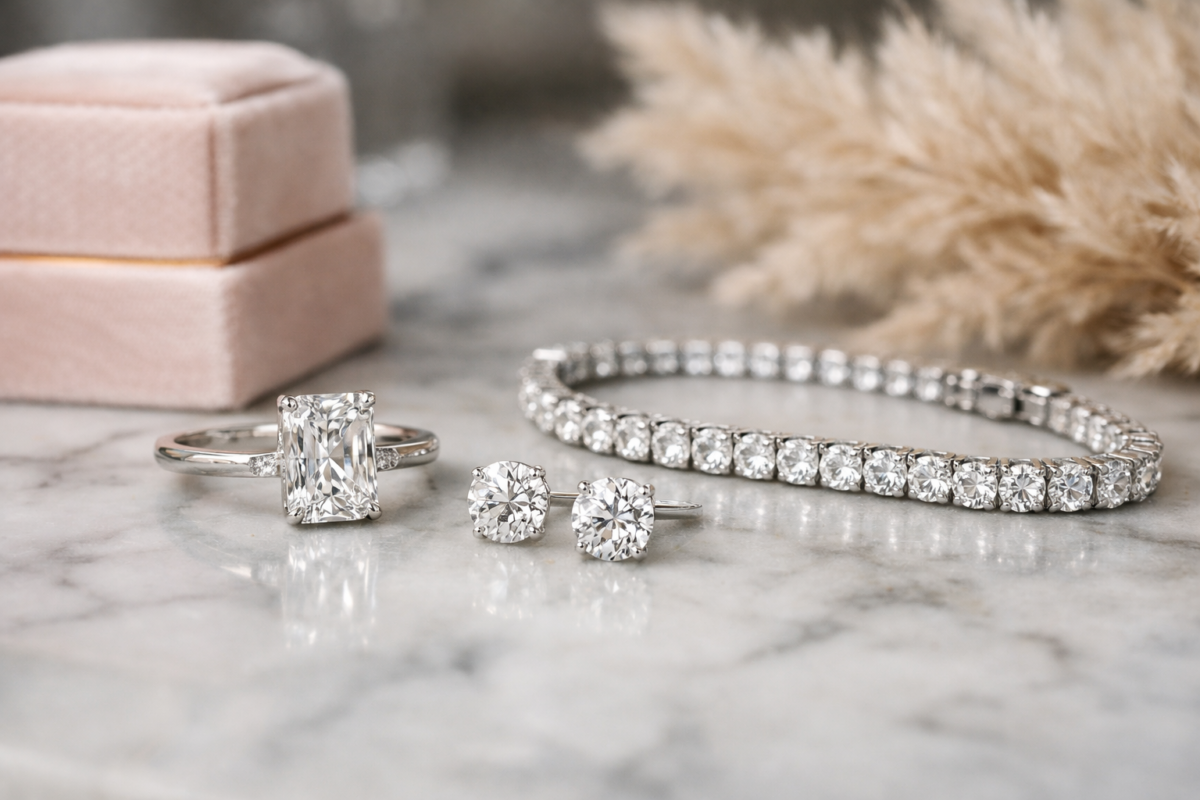
If 2026 had a signature look, it might be the unexpected engagement ring. While the round brilliant cut remains beloved, couples are exploring shapes with more personality: elongated ovals and pears, graceful marquises and modern cushions. These silhouettes are flattering on the hand and make the most of the stone’s surface area. Colored diamonds grown in the lab soft champagne hues, romantic blush tones and serene blues are another way couples are putting their personal stamp on tradition. And let’s not forget the men. We’re seeing an influx of engagement rings designed for him, from understated bands with a single inset diamond to bolder, statement pieces.
Beyond the big question
Once upon a time, diamond jewelry was reserved for engagements and anniversaries. Not anymore. Stacking rings are everywhere, and lab‑grown diamonds make them accessible. Imagine building a ring wardrobe the way you build a collection of shoes: a slim pavé band for everyday wear, a textured band with alternating stones for special occasions, perhaps a mixed‑metal piece that ties everything together. Eternity bands those circles of stones that symbolize unending love—have also moved beyond the wedding context. Friends buy them for each other, siblings celebrate milestones with them and individuals treat themselves just because.
Earrings, bracelets and a bit of sparkle for the day‑to‑day
Not long ago, tennis bracelets and sizeable diamond studs were seen as once‑in‑a‑lifetime purchases. By growing the stones in a lab, jewelers can offer these pieces at prices that don’t feel out of reach. Picture a delicate line of diamonds encircling your wrist, catching the light as you tap at your laptop or raise a coffee cup. Or imagine swapping your small stud earrings for a pair that’s a little bigger and bolder, turning every outfit into something special. The beauty of these pieces is that they aren’t locked away in a safe until a gala or wedding; they’re designed to be worn and enjoyed.
Mixing metals and making ethical choices
Sustainability doesn’t start and stop with the stone itself. Pairing lab‑grown diamonds with recycled gold or platinum is quickly becoming the norm. Recycled metals carry the same luster and durability as newly mined ones, but they’re kinder to the planet. We’re also noticing a resurgence of yellow gold—it feels warm and vintage‑inspired—but white gold, rose gold and platinum continue to have their fans. Can’t decide? There’s no rule that says you have to stick with one. We love seeing clients choose a white gold setting on a yellow gold band or layer different colored bangles together for a look that’s uniquely theirs.
Tips for choosing your piece
Shopping for a lab‑grown diamond is both similar to and different from shopping for a mined stone. The Four Cs—cut, color, clarity and carat weight—still apply, and it’s smart to understand what matters most to you. For instance, if sparkle is your top priority, invest in a well‑cut stone even if it means selecting a slightly smaller carat weight. Certified grading reports from trusted labs add peace of mind, confirming that what you’re purchasing meets the stated specifications.
But beyond the technicalities, think about lifestyle. Do you work with your hands? A bezel or low‑set ring might suit you better than a high‑prong design. Love to layer bracelets? Look for secure clasps and consider mixing different textures. Earrings should feel comfortable enough to wear all day; sometimes that means choosing a medium size instead of the largest pair you can find.
Finally, let your jewelry tell your story. Maybe the lab‑grown diamond appeals to you because it aligns with your values. Maybe you love the idea that science can create something so beautiful. Or perhaps you simply fall for a design that speaks to your sense of style. There’s no wrong reason. The rise of lab‑grown diamonds means you have more options than ever, and 2026 is the perfect year to explore them.
Looking ahead
We often say that jewelry is a snapshot of a moment—a proposal, a celebration, a personal triumph. With lab‑grown diamonds, those moments can be both meaningful and mindful. As we move through the year, expect to see more innovative designs, more color and more men stepping into the world of fine jewelry. Who knows? You might just find that the piece you didn’t even know you wanted becomes the one you wear every day.